

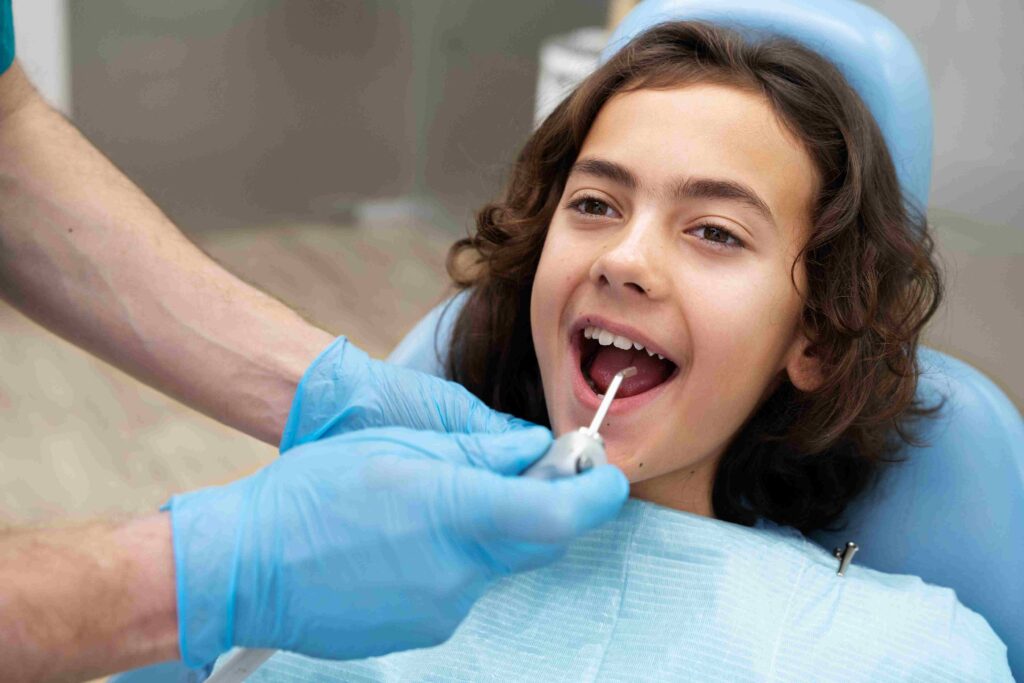
The Complete Guide to Kids Dental Sealants: Protecting Your Child’s Smile
As a parent, you want nothing more than to see your child smile with confidence. But tooth decay remains one of the most common childhood health issues, affecting millions of children each year. The good news? There’s a simple, painless, and highly effective solution: dental sealants.
In this comprehensive guide, we’ll answer all your questions about this preventive treatment, including how effective are dental sealants for children, do baby teeth need sealants, how sealants protect molars in kids, are dental sealants safe for children, and much more. Let’s dive in.
What Are Dental Sealants and How Do They Work?
Dental sealants are thin, protective coatings made from a safe, medical-grade plastic material. They are applied to the chewing surfaces of the back teeth—the molars and premolars—where most cavities in children are found.
How sealants protect molars in kids is simple yet brilliant. Molars have deep grooves and pits that toothbrush bristles simply cannot reach. Food particles and bacteria get trapped in these crevices, leading to decay. Sealants flow into these grooves, sealing them off and creating a smooth, easy-to-clean surface.
The application process is quick, painless, and non-invasive. There’s no drilling, no needles, and no discomfort. A dentist simply cleans the tooth, applies a special gel to help the sealant bond, paints on the sealant, and hardens it with a special curing light. That’s it—your child’s tooth is protected in minutes.
How Effective Are Dental Sealants for Children?
Now for the question every parent asks: how effective are dental sealants for children? The answer is impressive.
According to the Centers for Disease Control and Prevention (CDC), dental sealants prevent up to 80% of cavities in back teeth for years after application. School-age children without sealants have nearly three times more cavities than those with sealants.
| Age Group | Cavity Reduction with Sealants |
|---|---|
| 6-11 years | Up to 80% protection |
| 12-15 years | Sustained protection over time |
| Adults | Continued benefit with maintenance |
Sealants are most effective when applied soon after permanent molars come in—typically around age 6 for first molars and age 12 for second molars. This is a key children molar cavity prevention tips strategy that pediatric dentists recommend.
The long-term benefits are significant. A single application can protect your child’s teeth for several years, making it one of the most cost-effective preventive dental treatments available.
Do Baby Teeth Need Sealants?
Many parents wonder: do baby teeth need sealants? While sealants are most commonly applied to permanent teeth, there are situations where baby teeth can benefit from this protection.
Baby teeth (primary teeth) also have grooves and pits that can trap food and bacteria. If a child has deep grooves in their baby molars and is at high risk for cavities, sealants can provide valuable protection. This is especially important because:
- Baby teeth hold space for permanent teeth
- Severe decay in baby teeth can lead to pain and infection
- Healthy baby teeth help with proper chewing and speech development
However, the decision to seal baby teeth should be made by a pediatric dentist like Dr. Afnan Choudhry at Toothmate Kids Dental. He will assess your child’s cavity risk, the depth of their tooth grooves, and their oral hygiene habits before making a recommendation.
For most children, the priority is sealing permanent molars as soon as they erupt. But for high-risk children, sealing baby teeth can be an excellent preventive measure.
How Sealants Protect Molars in Kids: The Science Explained
Understanding how sealants protect molars in kids helps parents appreciate why this treatment is so valuable. Let’s break down the science.
The Problem with Molars
Molars are designed for grinding food. Their surface has natural pits and fissures—deep grooves that are magnets for food particles and bacteria. Even with excellent brushing, these grooves are difficult to clean effectively.
The Sealant Solution
A dental sealant acts as a physical barrier. It flows into every pit and fissure, creating a smooth, sealed surface. Here’s what happens:
| Without Sealants | With Sealants |
|---|---|
| Food and bacteria collect in grooves | Grooves are sealed and smooth |
| Acid attacks tooth enamel | Acid cannot reach tooth surface |
| Decay forms over time | Tooth remains protected |
| Cavity requires filling | No cavity develops |
Think of sealants as raincoats for your child’s teeth. They don’t change the tooth itself—they simply provide a protective layer that prevents decay-causing agents from reaching the enamel.
Are Dental Sealants Safe for Children?
Safety is always the top concern for parents. So, are dental sealants safe for children? The answer is yes.
Dental sealants have been used safely for decades. The American Dental Association (ADA) and the American Academy of Pediatric Dentistry (AAPD) both recommend sealants as a safe and effective preventive treatment.
What Are Sealants Made Of?
Sealants are made from medical-grade resin materials that are:
- BPA-free (modern formulations have eliminated BPA concerns)
- Non-toxic
- Biocompatible with oral tissues
Potential Side Effects
The only potential side effect is a rare allergic reaction to the resin material, but this is extremely uncommon. Unlike dental fillings, sealants require no removal of tooth structure and involve no needles or drilling.
When applied by an experienced pediatric dentist like Dr. Afnan Choudhry, sealants are completely safe for children of all ages.
Can Dental Sealants Stop Tooth Decay?
This is an excellent question: can dental sealants stop tooth decay? The answer depends on the stage of decay.
Sealants as Prevention
Sealants are primarily a preventive treatment. They stop decay from starting by sealing off the grooves where bacteria collect. In this sense, they absolutely stop tooth decay.
Sealants on Early Decay
In some cases, sealants can be applied over very early, microscopic decay (incipient lesions). By sealing off the decay from its food source (sugar and bacteria), the sealant can arrest the decay process and prevent it from progressing.
What Sealants Cannot Do
Sealants cannot treat cavities that have already formed. Once a cavity has developed, a filling is needed. This is why early application is so important.
The best approach is prevention first. Apply sealants soon after molars erupt to prevent decay from ever starting. This is one of the most effective kids tooth decay prevention strategies available.
Children Molar Cavity Prevention Tips
Beyond sealants, there are several children molar cavity prevention tips parents can implement:
1. Start Brushing Early
Begin brushing as soon as the first tooth appears. Use a soft-bristled toothbrush and a rice-sized amount of fluoride toothpaste for children under three, and a pea-sized amount for children three and older.
2. Floss Daily
Once two teeth touch, start flossing. This removes food and plaque from between teeth where brushes can’t reach.
3. Limit Sugary Snacks and Drinks
Frequent exposure to sugar feeds cavity-causing bacteria. Limit juice, soda, candy, and sticky snacks. When your child does have sweets, have them brush soon afterward.
4. Encourage Water
Water helps rinse away food particles and bacteria. Fluoridated tap water also strengthens enamel.
5. Schedule Regular Dental Visits
Professional cleanings remove plaque buildup, and regular exams allow your dentist to catch problems early. Most children should see the dentist every six months.
6. Ask About Fluoride Treatments
In addition to sealants, fluoride varnish treatments can strengthen enamel and make teeth more resistant to decay.
7. Apply Dental Sealants
As discussed, sealants are one of the most effective how to prevent cavities in kids strategies available.
How to Prevent Cavities in Kids: A Complete Approach
How to prevent cavities in kids requires a multi-pronged approach. Here’s a complete checklist:
| Prevention Method | How It Helps |
|---|---|
| Daily brushing | Removes plaque and food particles |
| Daily flossing | Cleans between teeth |
| Fluoride toothpaste | Strengthens enamel |
| Dental sealants | Protects grooves of molars |
| Regular dental visits | Professional cleaning and early detection |
| Healthy diet | Reduces sugar exposure |
| Fluoride treatments | Extra enamel protection |
| Mouthguards | Prevents trauma (chipped teeth are harder to clean) |
The most effective strategy combines all of these methods. Sealants are a critical component, but they work best alongside good oral hygiene and a healthy diet.
Kids Tooth Decay Prevention: When to Start
Kids tooth decay prevention should begin before the first tooth appears. Here’s a timeline:
Infancy (0-12 months)
- Wipe gums with a soft cloth after feedings
- Never put baby to bed with a bottle
- Schedule first dental visit by age 1
Toddler (1-3 years)
- Begin brushing with fluoride toothpaste (rice-sized amount)
- Wean from bottles and pacifiers
- Continue regular dental visits
Preschool (3-5 years)
- Supervise brushing (children lack dexterity to do it alone)
- Start flossing when teeth touch
- Apply fluoride varnish as recommended
School Age (6-12 years)
- Apply sealants to first permanent molars (around age 6)
- Encourage independence with supervision
- Consider orthodontic evaluation
Pre-teen and Teen (12+ years)
- Apply sealants to second permanent molars (around age 12)
- Discuss healthy habits for braces (if applicable)
- Address sports mouthguard needs
Early intervention is the key to lifelong oral health.
Frequently Asked Questions About Kids Dental Sealants
At what age should my child get sealants?
Children should get sealants on their first permanent molars as soon as they come in, typically around age 6. The second set of molars should be sealed around age 12. For high-risk children, sealants may also be applied to baby teeth.
How long do dental sealants last?
With proper care, sealants can last 5-10 years. During regular dental checkups, your dentist will check the sealants and reapply them if needed.
Does insurance cover dental sealants?
Most dental insurance plans, including Medicaid, cover sealants for children as a preventive benefit. Check with your provider for specific coverage details.
Can sealants be applied over existing fillings?
No. Sealants are applied to healthy, undamaged teeth. If a tooth already has a filling or active decay, a filling is needed rather than a sealant.
How much do dental sealants cost?
Without insurance, sealants typically cost $30-60 per tooth. With insurance, they are often fully covered as preventive care. Considering that a filling can cost $150-300, sealants are a very cost-effective preventive measure.
Why Choose Toothmate Kids Dental for Sealants in Santa Rosa
At Toothmate Kids Dental, Dr. Afnan Choudhry—a father and experienced pediatric dentist—provides gentle, compassionate care that puts children at ease. His approach focuses on building trust and making dental visits positive experiences.
We offer:
- Gentle, child-friendly sealant application
- Wide insurance acceptance, including Medicaid
- Serving Santa Rosa and surrounding communities (Rohnert Park, Sonoma, Healdsburg, Sebastopol, Windsor, Petaluma, Ukiah)
- A prevention-first philosophy focused on lifelong oral health
Conclusion: Protect Your Child’s Smile Today
How effective are dental sealants for children? The evidence is clear: sealants prevent up to 80% of cavities in back teeth and are one of the most cost-effective preventive dental treatments available.
Do baby teeth need sealants? Sometimes—especially for high-risk children.
Are dental sealants safe for children? Yes, they have been used safely for decades.
How sealants protect molars in kids is simple: they physically block bacteria from reaching the deep grooves where decay starts.
Don’t wait for cavities to develop. Protect your child’s smile today with dental sealants. Schedule an appointment with Toothmate Kids Dental in Santa Rosa and give your child the gift of a cavity-free future.