How to Prepare Child for Dentist — Why Fear Develops and How to Stop It
Dental anxiety affects nearly 20% of children globally — and it is almost never the parent’s fault. Children develop dental fear through three main pathways: a previous painful or rushed dental experience, learning fear indirectly from a parent or older sibling, or simple unfamiliarity with the sights, sounds, and smells of a dental office.
Understanding which pathway applies to your child is the first step toward addressing it. A toddler who has never seen a dentist needs very different preparation than a seven-year-old who had a traumatic tooth extraction. At Toothmate Kids Dental, Dr. Choudhry asks about every new patient’s history before any clinical work begins — because a personalized approach always works better than a generic one.
The great news: dental anxiety in children is highly treatable. Most children with significant dental fear become calm, cooperative patients within two to four positive visits. The key is choosing the right kids dental practice, using the preparation strategies below, and accessing sedation support when preparation alone is not enough.
10 Expert Tips on How to Prepare Child for Dentist Visits
1) Start Dental Visits Before Fear Has a Chance to Develop
The single most effective way to prepare child for dentist anxiety is scheduling their first dental visit before there is anything to fear. The AAPD recommends a first visit by age one — before any dental problems exist, before any treatment is needed, and when the only goal is to build familiarity and trust. Children who start early develop a comfort baseline with the dental environment that makes every future visit significantly easier. Read our complete first dental visit guide to know exactly what to expect.2) Use Positive, Simple Language — Avoid These Specific Words
The words you use before a dental appointment significantly impact how your child approaches it. This language shift is one of the simplest ways to help prepare child for dentist visits without creating new fears.
❌ AVOID these words: “It won’t hurt” — immediately plants the idea that pain is possible “Be brave” — implies there is something frightening ahead “Don’t cry” — makes children feel their emotions are unacceptable “Just a quick look” — children sense when they are being minimized
✅ USE these phrases instead: “The dentist will count your teeth and make sure they are strong” “They have special tools that help keep teeth healthy” “You can tell them if anything feels uncomfortable and they will stop” “Dr. Choudhry is really good with kids — many children love going there”
3) Read Dental Books Together Before the Appointment
For children aged 2–6, books that normalize dental visits are among the most effective preparation tools available. Recommended titles include The Berenstain Bears Visit the Dentist, Just Going to the Dentist by Mercer Mayer, and Brush Brush Brush by Alicia Padron. Reading these books in the days before the appointment makes the dental visit feel familiar and normal rather than unknown and threatening. Pair this habit with consistent preventive dental care to build a complete foundation for your child’s oral health.4) Role-Play the Appointment at Home
Playing dentist at home is one of the most powerful ways to prepare child for dentist appointments — especially for toddlers and preschoolers. Let your child be the dentist first: examining your teeth with a toy mirror, counting them, pretending to clean them. Then switch roles. This rehearsal familiarizes children with the physical sensations of a dental exam in a completely safe and playful context. Children who role-play at home are consistently calmer during their real appointment. Combine this with good home oral hygiene habits for the best results. Understanding how effective preventive care is for children can also help parents commit to these routines.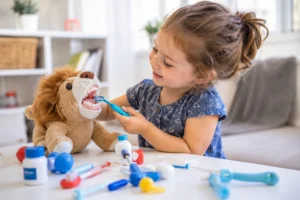
5) Schedule at the Right Time of Day
Appointment timing has a direct impact on child behavior in the dental chair. For toddlers and young children, morning appointments are almost always better — children are rested, fed, and at their emotional best. Avoid scheduling during nap time, before lunch when blood sugar is dropping, or late afternoon when young children are at their most tired and irritable. For school-age children, after-school slots often work well. Call 707-385-1318 and our front desk team will help find the best time for your child.6) Never Bribe With Candy as a Post-Visit Reward
This is one of the most common well-intentioned mistakes parents make. Offering sweets as a reward for a good dental visit creates a confusing association and directly undermines the cavity prevention goals the appointment was meant to support. Instead use non-food rewards: a small toy, a sticker, extra screen time, a trip to the park, or a special chosen activity. At Toothmate Kids Dental, every child receives positive reinforcement and a small non-food prize at the end of every visit — building genuine positive associations with dental care.7) Never Share Your Own Negative Dental Experiences
Children are extraordinarily perceptive. If a parent has dental anxiety, children pick up on it even from facial expressions and body language. If you have a history of dental fear, acknowledge it privately to our team at Toothmate Kids Dental so we can provide extra support — but keep the conversation with your child focused entirely on positive expectations. Research confirms that parental dental anxiety is one of the strongest predictors of childhood dental anxiety. The cycle can be broken with conscious, intentional communication.8) Visit the Office Before the Appointment
One of the most effective ways to prepare child for dentist anxiety is a pre-appointment comfort visit before any clinical work happens. Toothmate Kids Dental welcomes brief visits for particularly anxious children — your child can come in to meet our team, see the waiting room, and sit in the dental chair with no treatment involved. This transforms the environment from completely unknown to familiar before the real appointment begins. Call 707-385-1318 or contact us to arrange a comfort visit.9) Bring a Comfort Item
Allow your child to bring a stuffed animal, favorite toy, or security blanket. At Toothmate Kids Dental, we actively encourage this and incorporate the comfort item into the appointment — Dr. Choudhry will examine the stuffed animal’s “teeth” first, letting the child warm up before any clinical work begins on their own mouth. This is a core part of our comfort dentistry approach that sets every Toothmate appointment apart from a standard dental visit.10) Celebrate Every Visit Regardless of How It Goes
Every dental visit deserves genuine celebration — even ones that did not go perfectly. Acknowledge your child’s effort, not the outcome: “You sat in the chair — that took real courage.” “You let the dentist look at your teeth — I am so proud of you.” Building a sense of accomplishment around dental visits creates the emotional foundation for improvement at the next appointment. Progress in kids dental anxiety is cumulative — each positive experience at Toothmate Kids Dental builds directly on the last.When Preparation Is Not Enough — Sedation Options at Toothmate Kids Dental
Some children’s anxiety goes beyond what preparation alone can address. For these children — including those with previous dental trauma, sensory sensitivities, or special healthcare needs — knowing how to prepare child for dentist visits means knowing when to ask for clinical support. Toothmate Kids Dental offers a complete spectrum of anxiety solutions:Comfort Dentistry — built into every appointment. The way Dr. Choudhry speaks, the pace he sets, the Tell-Show-Do technique used for every instrument — all designed to reduce anxiety without any medication.

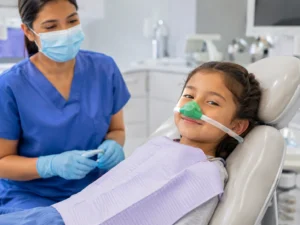
Nitrous Oxide — Laughing Gas — our most commonly used comfort option. Delivered through a small nasal mask, effective within minutes, and completely cleared from your child’s system before they leave the chair. No needles, no recovery time, no grogginess.
Oral Conscious Sedation — for children needing deeper relaxation. Administered orally before the appointment, producing a calm sleepy state while the child remains conscious and breathing normally.
IV Sedation — for children with extreme anxiety, special needs, or those needing extensive treatment completed in one session. Always administered by a licensed medical or dental anesthesiologist with complete monitoring throughout the procedure.
Every sedation appointment begins with a full medical history review and detailed written pre- and post-care instructions for parents. No child at Toothmate Kids Dental ever goes without necessary kids dental care because of fear.
How to Prepare Child for Dentist — Frequently Asked Questions
Here are the most common questions Santa Rosa parents ask us about how to prepare their child for the dentist.How do I prepare my toddler for their first dental visit?
Start reading dental-themed books together, play dentist at home, use simple positive language (“the dentist counts teeth to keep them strong”), and schedule a morning appointment when your toddler is rested and fed. Choose a kids dental practice that specializes exclusively in children — the environment, team, and approach will be calibrated specifically for young patients. Read our complete first dental visit guide for everything to know before that first appointment.What should I NOT say to my child before a dentist appointment?
Avoid: “it won’t hurt,” “be brave,” “don’t cry,” and any description of dental instruments or procedures. Also avoid sharing your own negative dental experiences or using the appointment as a threat (“if you don’t brush, the dentist will drill your teeth”). Instead, focus on simple, positive, accurate descriptions: “the dentist helps keep your teeth strong and healthy.”What can a dentist do for a child with extreme dental anxiety?
A specialized kids dental practice offers a range of clinical tools beyond gentle chairside manner. At Toothmate Kids Dental, these include comfort dentistry techniques, nitrous oxide, oral conscious sedation, and IV sedation — all administered by qualified professionals with full parental consent and a complete health review beforehand.Is sedation dentistry safe for children?
Yes — when administered by qualified anesthesia professionals following AAPD guidelines, sedation dentistry is extremely safe for children. At Toothmate Kids Dental, all anesthesia services are provided by licensed medical or dental anesthesiologists. We conduct a thorough health review before every sedation appointment and provide parents with detailed written instructions.