

Teething Symptoms in Babies: Signs, Timeline, and Safe Relief Every Parent Should Know
Teething symptoms in babies are one of the most common reasons parents lose sleep — quite literally — in the first year of their child’s life. Increased drooling, a sudden urge to chew on everything in sight, fussiness that seems to come out of nowhere — these are all signals that a tooth is on its way through the gumline. The good news is that teething, while uncomfortable, is a completely normal part of development, and there are safe, pediatrician-approved ways to ease your baby’s discomfort. In this guide, we’ll walk through exactly what teething looks like, when it typically starts, what’s safe to use for relief, and the warning signs that mean it’s time to call your pediatrician or pediatric dentist rather than wait it out.
When Does Teething Start?
Most babies cut their first tooth somewhere between 4 and 7 months of age, though it’s completely normal for teething to begin as early as 3 months or as late as 12 months. Genetics play a real role here — if you or your partner got your first tooth early or late, your baby may follow a similar timeline. There is no medical concern tied to an early or late first tooth on its own; every child’s mouth develops on its own internal clock.
By the time your child turns 3, they will typically have a full set of 20 primary teeth. The order is fairly predictable: the lower front teeth (central incisors) usually arrive first, followed by the upper front teeth a few weeks later, then the lateral incisors on both arches, the first molars, the canines (eyeteeth), and finally the second molars — usually completing the set somewhere between 25 and 33 months.
Common Teething Symptoms — What’s Normal
Every baby experiences teething a little differently. Some sail through with barely a fussy day; others struggle for a week at a time with each new tooth. The most commonly observed symptoms include:
- Increased drooling, often enough to cause a mild rash around the chin and mouth
- A strong urge to chew or gnaw on fingers, toys, or anything within reach
- Swollen, red, or tender gums, sometimes visible as a raised bump before the tooth breaks through
- Increased fussiness or irritability, particularly in the evening
- Mild disruption to sleep patterns
- A slight rise in temperature — technically not a true fever, but a small uptick is common
- Reduced appetite or temporary disinterest in feeding
- Rubbing at the cheek or ear on the side where a tooth (especially a molar) is coming in
These symptoms typically appear a few days before a tooth erupts and ease once the tooth has broken through the gumline.
Symptoms That Are NOT Caused by Teething — When to Call Your Pediatrician
This is the part many parents get wrong, and it matters for your baby’s safety. Despite popular belief, research consistently shows that teething does not cause high fever, diarrhea, vomiting, rashes on the body, or significant illness. If your baby has any of the following, the cause is something other than teething, and you should contact your pediatrician:
- A fever over 100.4°F (38°C)
- Diarrhea or vomiting
- A body rash (separate from the localized drool rash around the mouth)
- Persistent coughing or nasal congestion
- Unusual lethargy or a baby who seems “off” beyond normal fussiness
Attributing these symptoms to teething is one of the most common parenting myths, and it can sometimes delay parents from seeking care for an actual infection or illness. When in doubt, always check with your pediatrician rather than assuming it’s “just teeth.”
Safe Ways to Relieve Teething Pain
The goal with any teething remedy is comfort without risk. Here are the methods recommended by pediatric health organizations:
Gum Massage
Wash your hands, then gently rub your baby’s gums with a clean finger in a circular motion for one to two minutes. The light pressure mimics the sensation of biting down and can provide real, immediate relief.
Cold (Not Frozen) Items
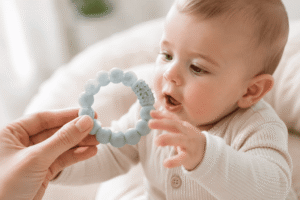
A clean, damp washcloth chilled in the refrigerator — not the freezer — makes an excellent teething aid. The cold helps numb sore gums, while the texture gives your baby something to gnaw on safely. The same applies to solid rubber teething rings: chill them in the fridge, never the freezer, since fully frozen items can be too hard and bruise tender gums.
Solid Teething Toys
Choose BPA-free, single-piece rubber or silicone teething toys with no small, detachable parts. Always supervise your baby while they’re using one, and inspect toys regularly for cracks or wear.
Extra Comfort and Cuddling
Sometimes the simplest remedy is the most effective. Extra holding, rocking, and skin-to-skin comfort can meaningfully ease a fussy teething episode, especially during the more uncomfortable first few teeth and the molars later on.
What to Avoid During Teething
The FDA and American Academy of Pediatrics have issued specific warnings about several once-popular teething remedies that are now known to be unsafe:
- Benzocaine or lidocaine teething gels — linked to a rare but serious condition that reduces oxygen in the blood, and in some cases, more severe complications
- Homeopathic teething tablets — some have been found to contain inconsistent or unsafe levels of belladonna, a toxic plant compound
- Amber teething necklaces or bracelets — a documented choking and strangulation hazard, with no proven pain-relief benefit
- Frozen teething toys — can become hard enough to bruise or injure a baby’s gums
- Rubbing alcohol or liquor on the gums — this old wives’ tale poses a genuine poisoning risk and should never be used
If you’ve used any of these in the past without issue, there’s no need to panic — but going forward, the safer alternatives above are equally effective without the risk.
Once the First Tooth Arrives — What Comes Next
The eruption of your baby’s first tooth is the official cue to schedule their first dental visit. The American Academy of Pediatric Dentistry recommends scheduling a visit by your child’s first birthday or within six months of that first tooth appearing — whichever comes first. This early visit isn’t about treatment; it’s about setting your child up for a lifetime of healthy dental habits and catching any concerns while they’re still small and simple to address.
Once that first tooth is visible, begin brushing twice daily with a dab of fluoride toothpaste no larger than a grain of rice. As more teeth arrive and start touching one another, your dentist can advise you on when to introduce flossing. Avoiding bottle feeding right before naps and overnight sleep also helps prevent early childhood cavities, since pooled milk or juice against the teeth overnight is one of the most common causes of decay in very young children — something we cover in more depth in our guide on baby teeth cavities and why they matter more than you think.
How Toothmate Kids Dental Supports Teething Families in Santa Rosa
At Toothmate Kids Dental, Dr. Afnan Choudhry welcomes infants for their very first dental visit with the same warmth and patience he brings to every appointment. We know that bringing in a teething baby can feel intimidating for first-time parents — there’s no need for that worry here. Our team will walk you through exactly what to expect as more teeth arrive, answer your questions about preventive dental care for infants, and make sure your child’s developing smile is on track from the very start.
If your baby has recently cut their first tooth, or you’re noticing the early signs of teething and want guidance on what’s ahead, we’re here to help. Call us at 707-385-1318 or schedule your baby’s first visit online — we serve families across Santa Rosa, Rohnert Park, Petaluma, Sonoma, Windsor, and the rest of Sonoma County.
Frequently Asked Questions About Teething
At what age do babies usually start teething?
Most babies get their first tooth between 4 and 7 months of age, though anywhere from 3 to 12 months is considered normal. Family history plays a role — babies often follow a similar early-or-late timeline to their parents.
Does teething really cause fever?
Teething can cause a very slight rise in temperature, but it does not cause a true fever above 100.4°F (38°C). If your baby has a higher temperature, the cause is something other than teething, and you should contact your pediatrician.
What is the safest way to soothe a teething baby?
Gum massage with a clean finger, a chilled (not frozen) washcloth or rubber teething ring, and extra comforting and holding are the safest, most effective options. Avoid numbing gels, homeopathic tablets, and teething necklaces, all of which carry documented safety risks.
When should my baby see a dentist after teething starts?
The American Academy of Pediatric Dentistry recommends a first dental visit by your child’s first birthday, or within six months of their first tooth appearing — whichever happens first. Learn more on our first dental visit guide.
Can teething cause diarrhea or a body rash?
No. Despite being a common belief, research shows teething does not cause diarrhea or a body rash. A drool-related rash limited to the chin and mouth area is normal, but diarrhea or a rash elsewhere on the body points to an unrelated illness, and you should contact your pediatrician.
Schedule Your Baby’s First Dental Visit Today
Teething is a milestone — and so is your child’s first trip to the dentist. At Toothmate Kids Dental, we make that first visit calm, reassuring, and genuinely informative for parents. Schedule an appointment online or call us at 707-385-1318 to get started.
(button widget) Button text: Schedule a Visit Button link: https://toothmatekidsdental.com/contact-us/
(text widget below button)
Toothmate Kids Dental 1221 Farmers Lane, Suite 500 Santa Rosa, CA 95405 Phone: 707-385-1318 Email: info@toothmatekidsdental.com